
Blog
IT Services in Kenya: What Should Nairobi Businesses Outsource in 2026

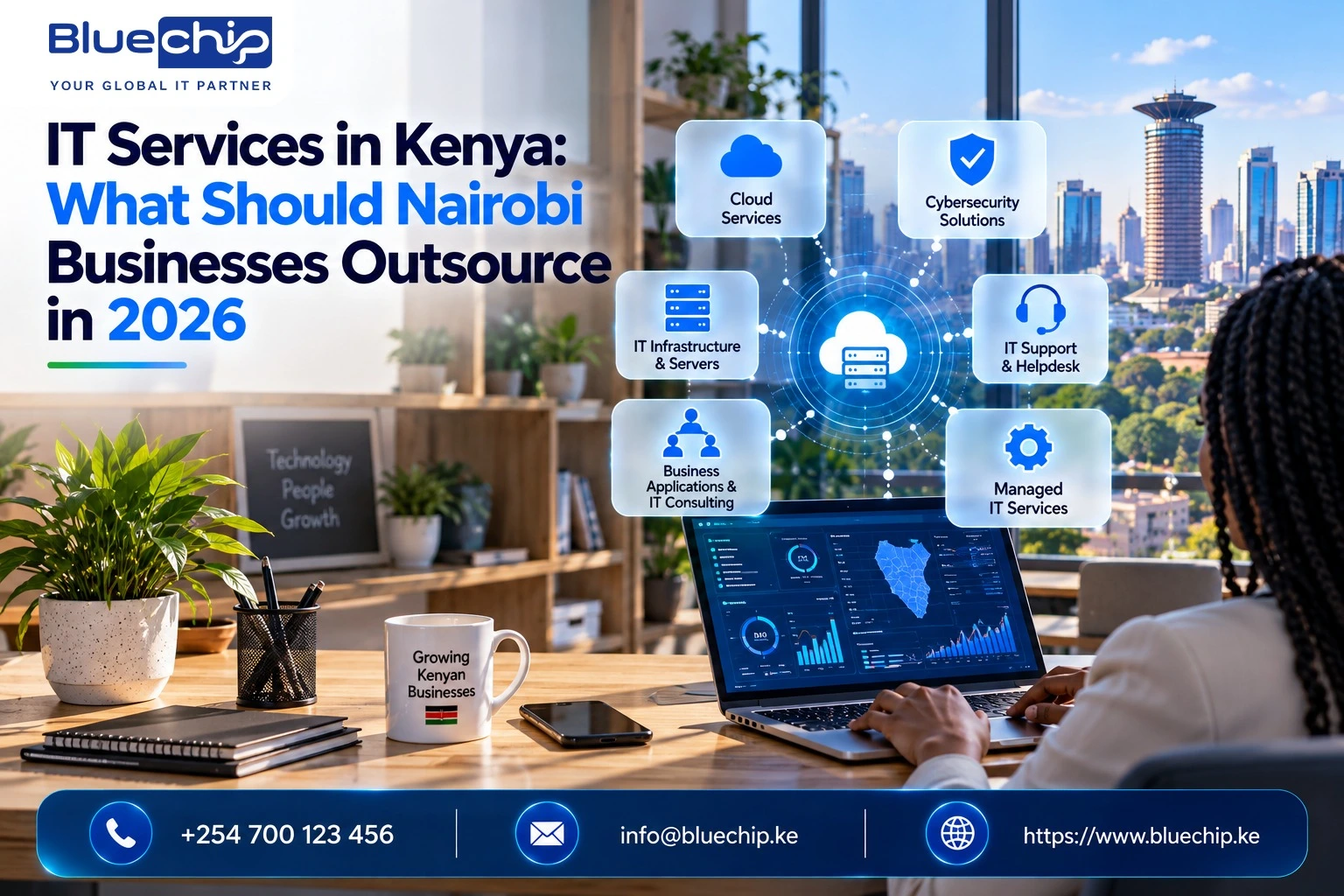
Making tough decisions on what IT roles to outsource and what to retain in-house is a key challenge for many successful businesses in Nairobi. From coping with the growing workforce and customer base, to increased security needs, firms have a lot to consider when managing their IT needs.
Outsourcing will enable companies to benefit from the expertise of IT pros and free up time and effort to focus on other key aspects of the business.
Here are the IT services Nairobi businesses should consider outsourcing in 2026.
IT Support / Helpdesk Services
Computer hardware, business applications and email play a critical role in the operations of most organizations. Technical issues can cause disruptions to individual workstations or the entire network, thereby impacting employees’ ability to perform their duties.
It is important for businesses to ensure there are qualified IT support staff on standby to address technical issues, respond to and install software requests, manage accounts, configure applications and desktops, and handle other similar tasks.
Depending on the terms of the contract, businesses can opt for remote desktop support, onsite assistance or a combination of both. For instance, many companies prefer to deal with minor technical issues internally while leaving more involved tasks to professional IT support.
Organizations need to look out for the hours of operation, response time requirements, escalation procedures and onsite support offered by Kenya IT services providers .
Cyber Security and Monitoring
Modern organizations are more reliant on technology than ever before, which makes them very vulnerable to cyber-attacks. In addition to protecting their computer systems, businesses should ensure their online accounts and applications are safeguarded against hackers.
Companies can outsource IT security services such as security assessments, endpoint management, firewall design and monitoring, and response management. For instance, a business may seek help monitoring and responding to security incidents on its customer database, including implementing stricter access control policies.
The IT security company Nairobi businesses choose should be able to describe the processes used to detect, report and escalate incidents, including any additional services that may be needed.
Network and Infrastructure Management
Email, cloud applications and communication tools have become indispensable in the modern workplace. A stable network is crucial in ensuring reliable access to these systems and services. Organizations should consider outsourcing their network infrastructure needs to professional firms, which include ensuring hardware and software are up-to-date and regular maintenance and upgrades are conducted.
For instance, a company considering expansion may need to upgrade its network infrastructure at its new location and rely on an expert to configure the necessary equipment and establish secure connections. Companies need to ensure they understand their network infrastructure management agreement, including the responsibilities of each party in relation to hardware and software maintenance, changes and fault diagnosis.
Cloud Services and Backup
Cloud services enable organizations to access applications and data anytime, anywhere. However, businesses need to take an active role in ensuring appropriate security measures are in place to protect their information and systems.
Firms can outsource cloud services management and backup to IT service providers that have the skills and expertise to monitor their systems and offer technical support as needed. Some of the services include Microsoft 365 management, migration and infrastructure, cloud backup and recovery, and monitoring.
For instance, a company that has experienced unauthorized deletion of files from its cloud storage may benefit from restoring the deleted data from its cloud backups, depending on the terms of its agreement and how long the files were deleted.
Businesses need to ensure they understand the responsibilities of each party in relation to cloud backup, including data access, costs and recovery procedures.
Software Updates and Maintenance
Outdated operating systems, applications and devices can pose a risk to the security of a business network and the confidentiality of its data. An experienced company can help a business stay up-to-date with the latest software versions and recommend the best solutions based on its needs.
Some IT firms can offer software maintenance, updates and associated technical support, ensuring hardware is updated as needed.
This can be a viable option for businesses without their own in-house IT support team.
Organizations need to ensure they fully understand the service terms, including eligible devices and applications, as well as any additional costs that may be incurred when updating hardware components.
IT Consulting and Technology Planning
Many businesses are not aware of the value of IT consulting, especially when it comes to anticipating future needs. Reputable IT consulting companies offer a range of services to help organizations identify their technology needs and create a plan to achieve their goals.
For instance, a Nairobi-based retail chain considering scaling up its online presence may need to conduct a technology assessment, including its network and cloud infrastructure, cybersecurity risk assessment and financial viability analysis, before purchasing any technology.
A qualified IT company can provide strategic advice on the most suitable technology solutions based on a business’s capabilities and aspirations.
What to Keep In-house
While it is important to outsource many aspects of IT management, businesses should retain direct responsibility for their technology-related decision-making processes. IT-related spending and company priorities should be reviewed and approved by company administrators.
In addition, organizations need to ensure they have the final say in matters affecting data security, including employee access to company systems and managing risks associated with third-party vendors.A hybrid approach is ideal for most businesses as it enables them to benefit from the technical expertise of IT consultants while enabling the company to retain control of its operations.
How to Choose an IT Services Provider in Kenya
Businesses should conduct research to identify IT companies that offer the services they need and have the skills and experience to meet their expectations. It is important to go through the service-level agreement (SLA), including response times and reporting requirements, among other factors.
In addition, companies should compare and contrast the additional services provided, including how data is handled and exit procedures, before reaching their decision.
The best IT outsourcing companies in Kenya will vary depending on the specific needs of the business.
Outsource IT Needs in Nairobi
Outsourcing enables Nairobi businesses to focus more attention and resources on their core activities while relying on the expertise of professional technicians to manage other tasks. Organizations need to make an informed decision on the IT roles to outsource and what to keep in-house.
With an understanding of the problem areas and prioritizing the most critical needs, Nairobi-based companies can make the most of their IT outsourcing options.
Time to take control of your firm’s IT needs and set up a reliable support plan that will enable you to achieve your goals without being held back by technical challenges.
Get in touch with an IT services provider and discover how the right IT solutions can support your organization’s growth trajectory in 2026.
Frequently Asked Questions
What are the biggest cyber threats to businesses in Kenya?
Major cyber threats to businesses in Kenya include phishing, ransomware, stolen login credentials, vulnerabilities in unpatched software and denial-of-service attacks. These incidents can expose customer information, disrupt business operations and cause financial losses.
Kenya’s Communications Authority, through KE-CIRT/CC, publishes cybersecurity reports highlighting emerging threats and attack trends. Businesses should regularly update their systems, secure user accounts, maintain reliable backups and monitor suspicious activity. Understanding these risks is an important first step towards improving business cybersecurity in Kenya and protecting critical systems and sensitive information.
How can a small business prevent phishing attacks?
Small businesses can reduce phishing risks by training employees to recognise suspicious emails, unexpected attachments, misleading links and urgent payment requests. Requests to change supplier bank details should always be verified through a separate, trusted communication channel.
Enable multifactor authentication, maintain appropriate email security controls and make it easy for employees to report suspicious messages. Where practical, phishing-resistant authentication provides stronger protection against credential theft. These measures cannot prevent every attack, but they reduce the likelihood of compromised accounts. Businesses seeking to strengthen email security can discuss their requirements with Bluechip Kenya.
How often should a company run a vulnerability assessment?
Vulnerability assessments should follow a risk-based schedule, with additional checks after major system changes or when critical vulnerabilities emerge. The Center for Internet Security (CIS) recommends scanning internal enterprise assets at least quarterly and externally exposed enterprise assets at least monthly under CIS Control 7. However, scanning alone is not enough.
Businesses should prioritise findings according to their severity and business impact, apply necessary patches and verify that identified weaknesses have been resolved. Regular vulnerability assessments help organisations identify security gaps, strengthen IT infrastructure and make informed decisions about cybersecurity risks.
Does a Kenyan SME need cybersecurity insurance?
Cybersecurity insurance may be worth considering if an attack could expose a Kenyan small or medium-sized enterprise (SME) to significant recovery costs, legal claims or prolonged business interruption. Depending on the policy, coverage may include incident response, data recovery, certain breach-related liabilities and eligible interruption losses. Businesses should carefully review coverage limits, exclusions, deductibles and security requirements before purchasing a policy.
A licensed Kenyan insurance adviser can help assess suitable options. Cyber insurance supports financial recovery, but it does not replace preventive measures such as secure backups, multifactor authentication, employee training and an incident response plan.